6 min read
Basketball Drills a Kid Can Do at Home, With or Without a Hoop
A practical list of named basketball drills kids aged 8 to 18 can do in a driveway, garage or basement, with what each one fixes, including drills that need no hoop at all.
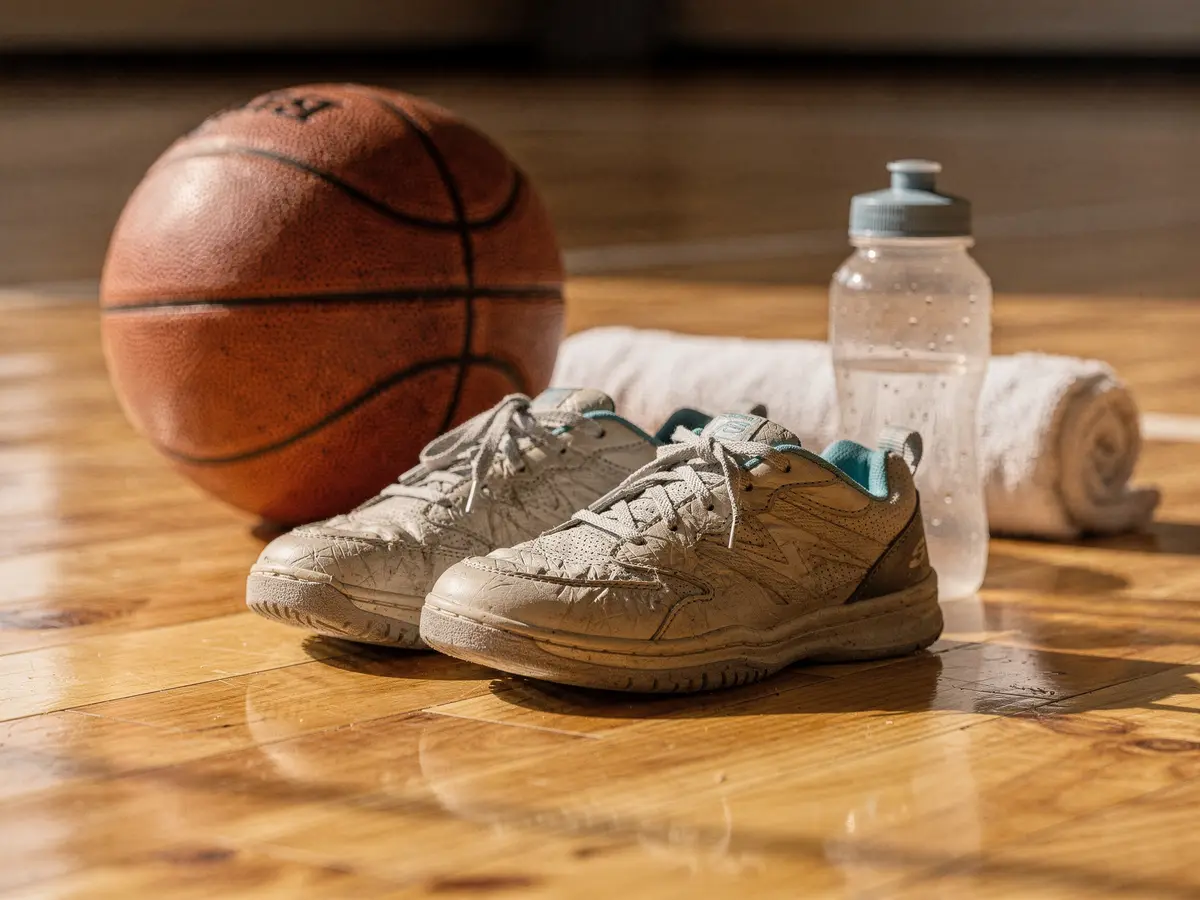
Gym time in Chatham-Kent is limited. Between school teams, rec nights, shared floors and a winter that keeps everyone indoors, most kids get far less court time than it takes to change the way they handle a ball.
The good news is that much of what holds a young player back can be worked on without a gym, without a coach standing over them, and often without a hoop. Weak-hand dribbling, soft hands, poor footwork, a shooting elbow that drifts sideways: that is all repetition work. In our experience, a short honest session in a driveway or a basement, most days of the week, does more for those things than one extra hour of pickup.
Below are drills a player roughly 8 to 18 can do at home. Each one says what it fixes and gives the rep counts we would ask for. Treat the counts as a starting point rather than a rule.
Five rules before the drills
- Short and often beats long and rare. Fifteen to twenty minutes is a real session.
- Count reps out loud. It keeps the pace honest and stops daydream dribbling.
- Do double the reps with the weak hand. Always. That is where the improvement lives.
- Slow and correct first. Speed only once the movement looks the same every time.
- Phone down, or used only as a timer. Focused minutes beat distracted ones.
Ball handling with no hoop at all
These need a ball and about two square metres. A basement, a garage with the car out, a bedroom floor, a patch of driveway. Bare concrete chews up an indoor ball, so use an older ball outside.
Pound dribbles. Dribble hard at knee height, right hand then left, three rounds. Eyes up on a spot on the wall the whole time. Fixes a soft, tentative dribble and teaches a player to feel the ball instead of watching it.
Low pound dribbles. The same thing in a proper stance with the ball at ankle height. Fixes the habit of standing straight up under pressure.
Figure eights. Weave the ball around and between the legs with no dribble, forward and then backwards. Then the dribbling version both ways. Fixes hand speed and comfort with the ball in tight space.
Wraps. Circle the ball around the waist, then the head, then each knee, both directions. Two minutes total. Fixes fumbling and builds the fingertip control everything else sits on.
Stationary move series. Crossover, between the legs, behind the back, a set of each. Fixes the player who has one move and telegraphs it.
Two-ball dribbling. Two balls at once, same-time and then alternating, three rounds. One of the quickest ways we have found to expose a weak off-hand, because the strong hand cannot cover for it.
Wall drills: passing and catching with nobody to pass to
Any solid exterior wall or garage wall works. Check what is on the other side first.
Chest passes. Stand a few metres back and step into each one. Fixes lazy passes that float and get stolen.
One-hand push passes. Aim at a taped target about the size of a dinner plate, both hands in turn. Fixes accuracy on the pass a player actually throws in traffic.
Quick catch and repass. Pass, catch, repass with no dribble, as many as possible in forty-five seconds, three rounds. Fixes slow hands and the panic that follows a catch.
Shooting form when there is no rim
You can build a shot without a hoop, and for younger players it is often better, because nothing tempts them to heave the ball to make it reach.
Lying-down form shots. Flat on the back, shoot the ball straight up with one hand, catch it, repeat. Three short sets. The ball should come back down to the same spot with backspin. Fixes a two-handed shove and a flat release.
Wall arc shots. Stand a couple of metres from a wall, tape a target above head height, and shoot one-handed at it with a high arc. Fixes a flat shot, which is one of the most common reasons we see a shot rattle out.
Hold the follow-through. Shoot, then freeze the follow-through and count to ten. Boring. It works.
Footwork and conditioning with no ball
For the nights when the ball is in the car or the gym bag is at school. A hallway and a strip of painter's tape is enough.
Jump stops and pivots. Two steps, jump stop, front pivot, reset, both directions. Fixes travelling calls and the stumble after a catch.
Defensive slides. Slide a few metres and back, rest, repeat for four rounds. Hands active, feet never crossing. Fixes an upright, flat-footed defender.
Line hops. Two feet over a tape line, forward and back, then side to side. Four short rounds. Fixes slow feet and heavy landings.
Closeout steps. Sprint a few metres, chop the feet short, hands up. Fixes the player who runs past a shooter.
Low ceilings, small driveways and other real houses
A low basement ceiling rules out shooting but is fine for every ball-handling drill above, plus the footwork. A single-car garage fits pound dribbles, wraps and wall passes. If the driveway slopes, do stationary work at the top rather than chasing the ball into the road. If the neighbours are close and it is late, everything here except pound dribbles and wall passes is quiet.
With a driveway hoop
Mikan drill. Alternate right and left hand layups under the rim without letting the ball touch the ground. Fixes finishing with the off-hand, which is often the difference between a made layup and a blocked one.
Form shooting from five spots. Start close to the rim and make a set at each spot before moving out. A rim is ten feet up no matter whose driveway it is, so range built on a broken shot never travels.
Free throws in threes. Shoot three, walk away, come back. Repeat for a few rounds and track the makes in a notebook. Fixes the routine rather than the stroke, and the routine is what fails in a game.
Building an actual week
Pick three drills, not twelve. Two ball-handling, one shooting or footwork. Run them Monday to Thursday, take Friday off, and change one drill every couple of weeks so the player does not go on autopilot. Keep a scrap of paper on the fridge with the date and the reps. In our experience, the ones who write it down are the ones who keep going.
If you coach a team, or you are a parent building a longer plan and running out of ideas, SixSevenBall is basketball coaching software with a drill library, a play designer and practice planning tools, along with free coaching guides. It is a third-party product with no connection to us, and it is built for coaches rather than families, but the drill material is useful either way.
What home work will not fix
Be honest with your kid about this. Driveway reps do not teach reading a defence, playing through contact, communicating on help defence, or staying composed when a game is close. Those need other people on a floor. Home work makes a player good enough at the basics that a coach can teach them the rest.
That is the split we work from at Chatham Kings. Our training sessions for ages 8 to 18 cover skill work with eyes on the player, from single private sessions at $99 to small-group pods. Our after-school program for ages 8 to 14 runs Monday to Friday, with doors at 3:00 PM for arrival and homework and a coached session from 4:00 to 6:00 PM. Camps for ages 8 to 14 run roughly 9:00 AM to 3:00 PM. All of it works better when a player has already put in the quiet reps at home.
Start tonight with pound dribbles and figure eights. Ten minutes. Everything else on this list can wait until next week.